
Why Instagram Alone Is Not Enough for a Yoga Business Anymore
Instagram can help people discover your yoga business. But if you want to build trust, explain your offers clearly and make booking feel easy, it should not be the only place your online presence lives.
Book a ConsultationUpdated 18 November 2026 · By Liam O’Neill
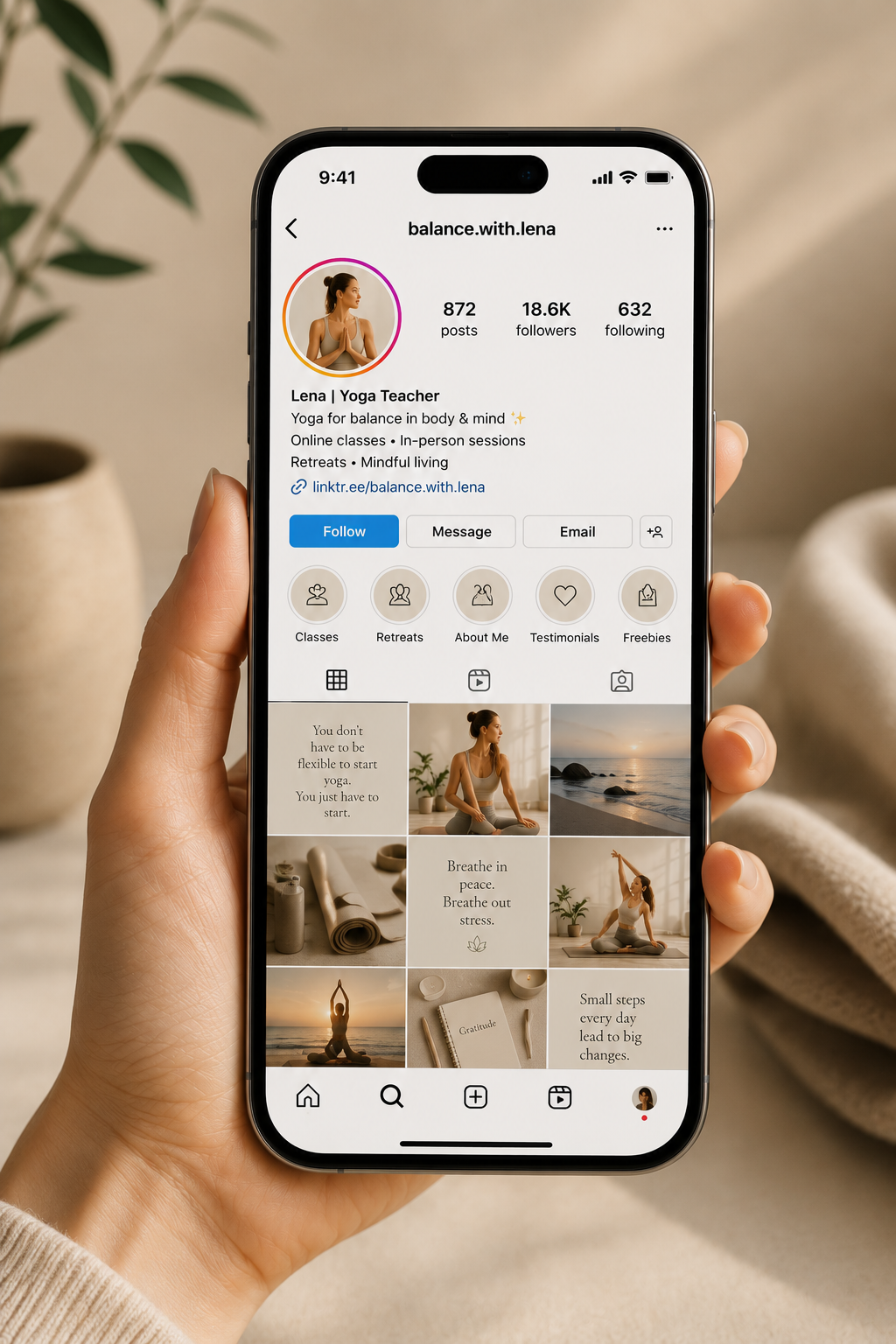
For many yoga teachers, Instagram is the first place they start building an audience. It feels natural: visual, personal and immediate. You can share class updates, post videos, show your teaching style and connect with students directly.
Can you run a yoga business using only Instagram?
Yes, particularly when you are starting out. Instagram can help you find early students, share updates and build personal connections without a full website. But as your classes, services or audience grow, relying on a social profile alone can make important information harder to find and bookings harder to manage.
A website is not a magic solution or a replacement for showing up consistently. It is a central place for your schedule, your story, your booking process and the details a new student needs to make a decision. The aim is to make Instagram and your website work together, not choose one over the other.
But there is a quiet problem many yoga businesses eventually face. Instagram is good at creating attention. It is not always good at creating clarity.
A new student may find you through a reel, a story or a recommendation. They may like your energy and feel curious. But then they need to understand what you offer, where you teach, how to book, whether your classes are right for them and whether they can trust you.
If that information is scattered across highlights, captions, old posts and direct messages, the experience can become confusing.
Instagram is a window. Your website is the room.
Instagram gives people a glimpse of your world. Your website gives them somewhere to land.
That distinction matters. A yoga business is built on trust, energy and emotional connection. People are not simply buying a class. They are choosing a teacher, an atmosphere and an experience they hope will feel safe and right for them.
Your website gives people the space to make that decision calmly.
A strong yoga website does not replace Instagram. It gives your Instagram traffic somewhere clearer, calmer and more trustworthy to go.
People need more than beautiful content before they book
A beautiful Instagram feed can create interest. But before someone books, they often need answers:
- What kind of yoga do you teach?
- Where are your classes held?
- Are beginners welcome?
- How do they book?
- Do you offer private sessions?
- Are your retreats still available?
- What makes your approach different?
These questions should not be hard to answer. When people feel uncertain, they may delay making a decision. A clear website reduces that friction and helps them move from curiosity to confidence.
From a reel to a first class: the student journey
Imagine someone in your town sees a short reel of your gentle evening yoga class. They like the atmosphere, but they have never attended before and want to know whether beginners are welcome.
Instead of searching through highlights or sending several messages, they follow the link in your Instagram bio. On your website, they find a clear class description, the venue, the timetable, a little about you and a straightforward booking button.
That journey does not guarantee a booking. It simply removes unnecessary questions between initial interest and a confident next step.
Try this yourself: ask someone unfamiliar with your classes to open your Instagram profile, find the price and location of a beginner session, and reach the booking step. Note where they hesitate. This simple usability check can reveal problems without inventing conversion statistics.
Instagram versus a website: what each does best
Both channels can play a valuable role. The difference is what visitors are usually trying to do on each one.
| Need | Your website | |
|---|---|---|
| Discovery | Reels, shares and community engagement | Relevant searches and direct visits |
| Trust | Personality and behind-the-scenes connection | Experience, testimonials and detailed answers |
| Class details | Captions, highlights and profile links | Dedicated, easy-to-update pages |
| Booking | DMs or a link in your bio | A clear booking journey and integrations |
| Control | Platform-led layout and features | More control over design, content and structure |
| Search visibility | Profiles and public posts may appear in search | Dedicated pages can target relevant topics and locations |
The strongest approach is often to use Instagram for connection and a website for depth, clarity and action.
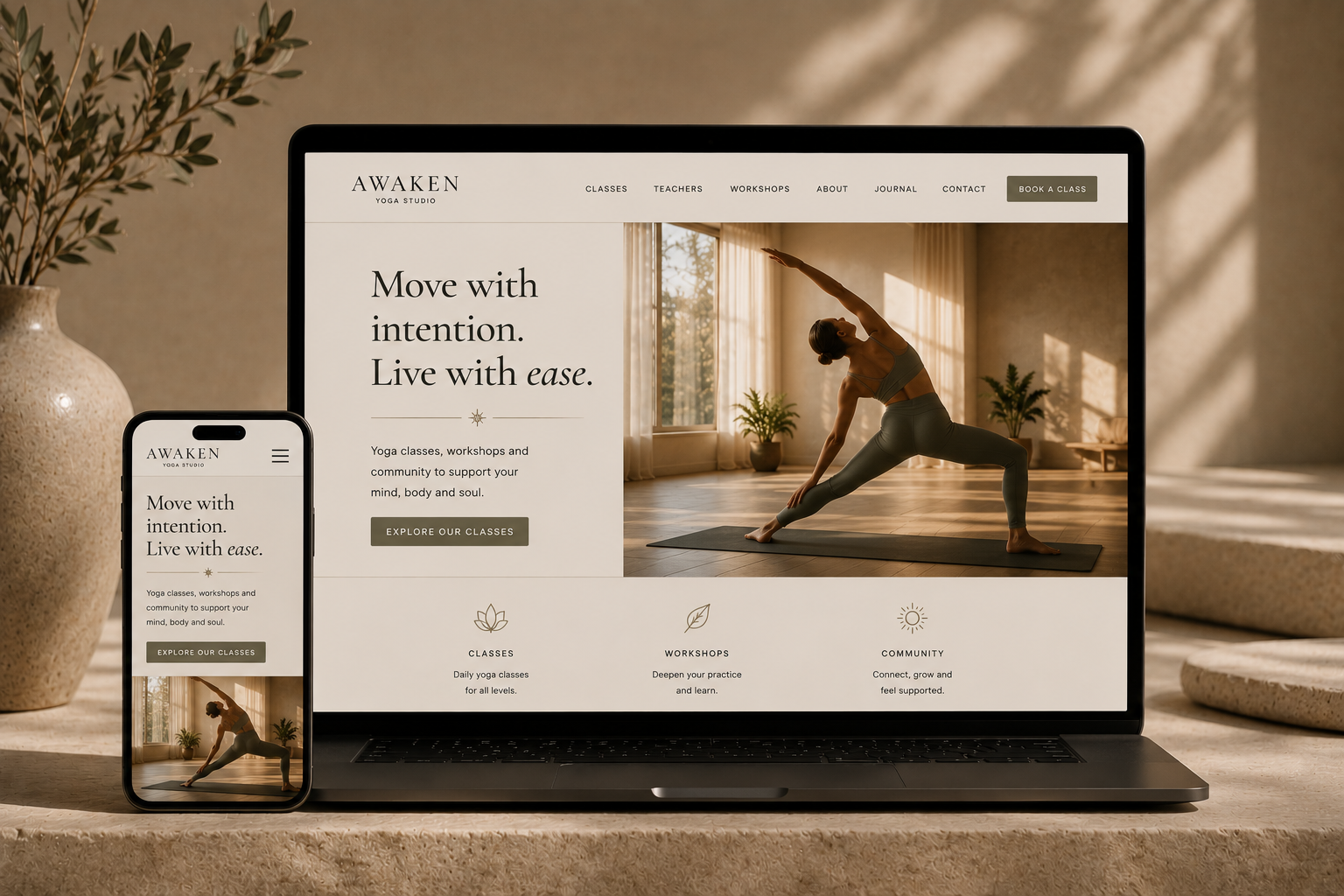
Your website helps people understand the value of your work
Many yoga teachers are deeply skilled, thoughtful and experienced, but their online presence does not always reflect that.
A calm, well-structured website can help your teaching feel more professional, established and easier to trust. It gives your work the space it deserves.
This becomes especially important if you offer retreats, private sessions, workshops, teacher trainings, online memberships or premium wellness experiences. A dedicated website for yoga teachers can explain these offers without expecting prospective students to search through months of social content.
Social media moves quickly. Your website creates stability.
Instagram is fast by design. Posts disappear down the feed. Stories vanish. Highlights become crowded. Important information can be missed.
Your website is different. It becomes the steady centre of your online presence, where people can reliably find:
- Your class schedule and locations
- Your retreat details and availability
- Your pricing or next-step information
- Your teaching approach and experience
- Genuine testimonials and student feedback
- Your booking links and contact options
Instagram is a platform you do not control. A website on your own domain gives you much greater control over your content, presentation and customer journey, although hosting and other services still have their own dependencies.
That does not make Instagram unimportant. It means Instagram should lead people somewhere stronger.
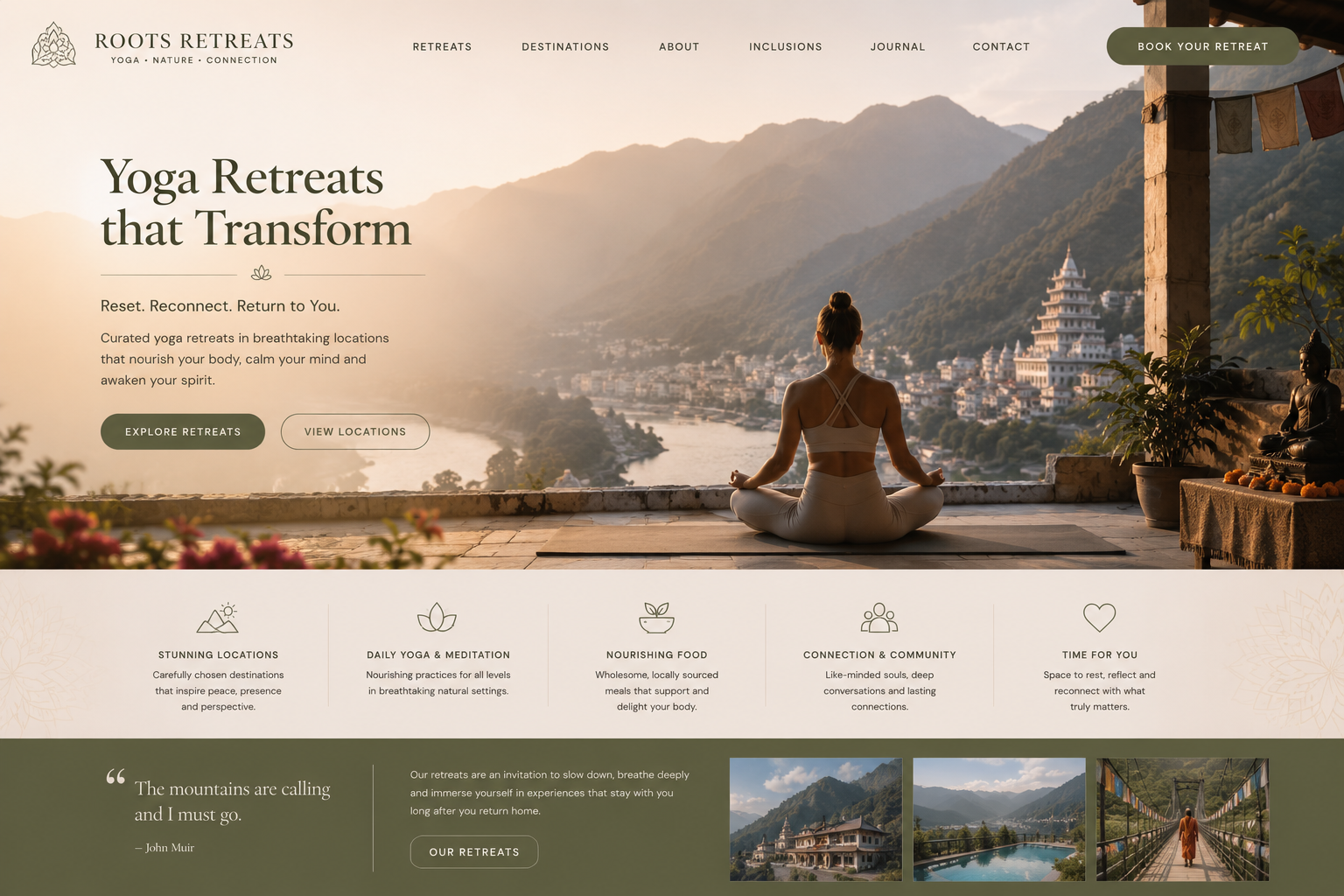
A website makes premium offers easier to trust
The more personal or higher-value your offer is, the more reassurance someone may need before enquiring.
Booking a retreat is not the same as liking a post. Joining a membership is not the same as watching a reel. Enquiring about private yoga is not the same as replying to a story.
These decisions require clarity. A strong yoga retreat website can explain the experience, location, itinerary, accommodation, pricing and next steps while communicating the feeling behind the offer.
It answers common questions before they become obstacles, helping the enquiry or booking process feel more natural.
Planning a retreat, private yoga offering or more established teaching business? Explore websites for yoga teachers and see how a clearer online home can support your next stage.
Your website should feel like part of the student experience
A yoga website should not feel cold, corporate or cluttered. It should feel aligned with the way you teach.
If your work is calm, grounded and intentional, your website should feel that way too. Good design is not only about appearance. It is about how people feel as they move through the page: confused and unsure, or guided and reassured?
Your website is not just information. It is often the first real experience someone has of your yoga brand.
Six things a yoga website should make clear
Who you help
Visitors should quickly understand whether your classes, retreats or services are right for them.
What you offer
Your services should be easy to find, understand and compare without searching old posts.
Why trust you
Your story, experience, genuine testimonials and atmosphere should help people feel confident.
How to book
Make the next step obvious, whether it is booking a class, enquiring or messaging you.
How it feels
Your visual style should reflect the emotional quality of your teaching or retreat experience.
Where to go next
Guide visitors gently from one useful page to the next instead of leaving them to piece things together.
Instagram and your website should work together
The goal is not to stop using Instagram. It is to stop asking Instagram to do everything.
Instagram is excellent for connection, visibility and personality. Your website is where that attention becomes clearer and more purposeful. Together, they create a simple journey:
There is another advantage: unlike a social profile alone, a well-built website can also become discoverable through relevant Google searches over time. Thoughtful yoga SEO helps people find your teaching when they are actively looking for it.
What a clearer booking journey looks like in practice
Imagine an independent teacher running a Monday evening beginners’ class and a Saturday morning flow class. On Instagram, the location is mentioned in one caption, prices are in a highlight and booking requires a direct message. The teacher may be doing excellent work, but a new visitor has to assemble the details.
Before: “DM me for details” sends prospective students into a conversation before they know whether the class fits their schedule.
After: A dedicated class page states who it suits, the venue, day and time, what to bring, the price and a single booking button. The Instagram profile links straight to that page.
The improvement is not a promise of more students. It is a clearer route to making an informed decision. For a closer look at the common obstacles, read 5 Reasons Your Yoga Website May Be Losing Bookings. To measure whether it helps, track visits from Instagram, booking-button clicks, completed bookings and recurring questions from prospective students. Compare equivalent periods and account for changes in seasonality or class availability.
When genuine before-and-after client evidence becomes available, this example can be replaced with a named or permission-approved case study, including the dates, scope of work and verifiable results.
When is Instagram enough, and when do you need a website?
You do not need an elaborate website to be a credible yoga teacher. The right decision depends on how people currently find you, how complicated your offer is and how easily a prospective student can book. Here is a practical way to decide without buying more than you need.
Instagram may be enough for now
If you teach a small number of classes, rely on referrals and already have a dependable booking link, Instagram can be a reasonable starting point. Keep your schedule, location and contact details easy to find.
A focused one-page website
If you repeat the same answers in DMs, want a professional introduction or need one dependable destination for your profile link, a concise website with class details and booking can make sense.
A structured multi-page website
If you offer retreats, private sessions, memberships or different class types, separate pages help visitors compare options and give relevant searches a more specific destination.
A useful test: ask someone unfamiliar with your business to find the right class, its price, location and booking step in under two minutes. Note where they hesitate. Fix those points before investing in unnecessary features.
Can a yoga website help people find you on Google and AI search?
Yes, a website gives search systems a clearer, more organised source of information about your yoga business. Someone might search Google for beginner yoga classes in Manchester, private yoga lessons near me or weekend yoga retreats in the UK. A relevant, accessible page can explain the class, location, suitability, availability and how to enquire.
AI-assisted search adds another way people discover and compare businesses. Assistants may use publicly accessible web information to answer questions or suggest options, but no website, schema markup or SEO provider can guarantee an AI recommendation. What you can control is whether your own site gives accurate, consistent and useful answers.
Help Google understand your classes
Use clear class names, locations, schedules, descriptive page titles, accessible text and straightforward booking links. For local teaching, maintain an accurate Google Business Profile where eligible.
Give AI systems useful facts
Clearly state who you teach, where, what each class involves, who it suits, relevant credentials and how to book. Keep information current and consistent across your website and public profiles.
That is one reason SEO for yoga businesses matters: it helps build an organised, useful online presence beyond a single social platform. It is a long-term investment in discoverability, not a promise of rankings or bookings.
Google’s guidance on AI features and websites explains that normal search fundamentals, indexability and useful textual content remain important; there is no special AI schema required. Its Search Essentials explains the foundations of crawlable, helpful content.
OpenAI’s publisher guidance explains that allowing OAI-SearchBot can help public pages be discovered for ChatGPT search. These resources describe eligibility and best practices, not guaranteed placement or recommendations.
What changes when your yoga business starts to grow?
Not every yoga business needs the same kind of website. A teacher running two local classes has different priorities from a studio managing several instructors or a retreat organiser asking guests to commit to a multi-day experience. The useful question is not how many pages you can create, but what information your prospective students need before they feel comfortable taking the next step.
Make your classes easy to join
Start with a clear timetable, class locations, suitability for beginners, a short introduction to your teaching and one obvious booking link. A thoughtful yoga teacher website can be small without feeling basic.
Help visitors choose confidently
Students may need to compare class styles, teachers, membership options and studio facilities. A well-organised studio website helps them find the right class without asking the same questions repeatedly.
Make the commitment feel clear
Retreat guests often need accommodation details, schedules, travel guidance, inclusions, cancellation terms and reassurance about the experience. Dedicated retreat pages give these decisions the attention they deserve.
Online yoga businesses have their own requirements too: membership access, video libraries, payment information and a clear explanation of what subscribers receive. The website should support the way the business actually operates rather than force every yoga offer into the same generic template.
How a yoga website can support local discovery
Imagine a teacher offering restorative yoga in Sale, Greater Manchester. Someone who already follows that teacher on Instagram may see the next class announcement. But someone who has never heard of the teacher might instead search for “restorative yoga in Sale” or ask an AI assistant about beginner-friendly classes nearby.
A website gives the teacher somewhere to publish a dedicated, useful explanation of those classes. That page can state the area served, venue, class format, typical experience level, schedule and booking process in ordinary language. It can also answer practical questions about equipment, parking, accessibility and what to expect on a first visit.
AI-assisted discovery is less predictable. An assistant may use information from websites, maps, directories or other sources, and different systems may produce different answers. You cannot guarantee inclusion, but you can make your business easier to understand by publishing clear facts, keeping them current and avoiding contradictory details across platforms.
Is your Instagram doing too much work?
If several of these statements sound familiar, it may be time to give your yoga business a clearer home online.
- Students regularly DM you for information that should be easy to find.
- Your timetable, venue or prices are buried in old posts or highlights.
- People ask whether your classes are suitable for beginners.
- Your retreat or private-session details take several messages to explain.
- Your Instagram bio link leads to too many choices or an unclear next step.
- Your current online presence no longer reflects the quality of your teaching.
You do not necessarily need a large website. A small, well-organised site with a clear home page, useful class information and an easy booking path may be enough to begin.
How to move from Instagram-only to a useful yoga website
You do not have to abandon your existing marketing or commission an elaborate website overnight. In fact, starting with a focused set of pages is often more manageable. Build the essential journey first, then expand it as your classes, retreats or memberships develop.
- Identify your most important student question. Look through recent messages and enquiries. Do people ask about class suitability, price, location, availability or how to book? Use those questions to shape the website’s opening sections.
- Create one reliable home for your offers. Give each important service enough space to explain what it includes, who it suits and what happens next. Keep the details consistent with what you share on Instagram.
- Choose a simple booking route. A class booking platform, enquiry form, email or direct booking link can all work. The best choice is the one students can understand and use comfortably on their phones.
- Add credible reasons to trust you. Explain your teaching approach and relevant experience. Use genuine testimonials with permission, realistic photographs and clear policies where they matter. Avoid exaggerated claims about results or wellbeing.
- Connect your Instagram content to the right pages. Rather than sending everyone to a generic homepage, link a retreat announcement to its retreat page and a beginner-class post to the relevant class information.
- Measure and refine the journey. Check which pages people visit, whether booking links work and which questions still arrive by message. Improve the confusing parts before adding unnecessary features.
A useful website is never truly finished. Class schedules change, new teachers join, retreats sell out and your own positioning becomes clearer. Small, regular updates keep the site valuable for students and more reliable as a source of information for search systems.
Questions yoga teachers often ask
Do yoga teachers really need a website?
Not necessarily at the beginning. A website becomes more valuable when you want organised class information, a consistent brand, relevant search visibility and a booking journey that does not depend entirely on direct messages.
Can I run a yoga business entirely through Instagram?
Yes. Some teachers build a business through Instagram, referrals and messaging. The trade-off is that important details may be scattered across posts and highlights, and your presence remains dependent on the platform’s design and rules.
Will a yoga website help me get more students?
It can make your teaching easier to discover and your classes easier to understand and book. Results depend on local demand, competition, the quality of your offer, marketing and the experience visitors have after reaching your site. No number of new students is guaranteed.
Is Instagram or a website better for yoga marketing?
They serve different purposes. Instagram is strong for personality, community and timely updates. A website is stronger for structured class information, detailed offers, search-friendly content and a controlled booking journey. Using both together is often the most practical approach.
Can my yoga website appear in ChatGPT recommendations?
It is possible for publicly available website information to inform AI-assisted answers or recommendations, depending on the system and query. Clear, accessible, current information can help systems understand your business, but no particular markup or optimisation guarantees inclusion.
What should a yoga teacher website include?
Start with a clear description of who you help, class types, location, timetable, pricing or next steps, teacher background and an easy booking or enquiry route. Add genuine testimonials, retreat details and FAQs where they help students decide.
Should I build a website before growing my Instagram?
You can develop both gradually. A simple website with essential class information and one clear call to action can support a modest Instagram presence. You do not need a large website or a large follower count to begin.
How do I connect Instagram to my yoga website?
Put a relevant website link in your Instagram bio, point stories and posts to the most useful class or retreat page, and use consistent descriptions and branding. Test the booking journey on a phone so visitors can move from a post to the right next step without confusion.
Final thought
Instagram can help people discover your yoga business. But your website helps them decide.
It gives your work a clearer home. It helps people understand your offers. It builds trust before the first message and makes booking feel easier.
Because people do not only book what they see. They book what they understand, trust and feel ready to step into. Explore more practical advice in Yoga Business Insights.
Book a consultation for your yoga website
If your Instagram is active but your website is missing, unclear or no longer reflects the quality of your work, I can help you create a calmer, more strategic online home.